
This 6-night tour is the perfect introduction to northern Gujarat's richest offerings — blending UNESCO-listed heritage, thrilling wildlife encounters, and living craft traditions into one seamless journey. Begin in Ahmedabad, India's first UNESCO World Heritage City, with a dawn Heritage Walk through the walled city's labyrinthine pols, visiting the exquisite Swaminarayan Temple, Sidi Saiyed Mosque's legendary 'Tree of Life' latticework, and Rani Rupmati Mosque. Spend the afternoon tracing Gandhi's footsteps at the Sabarmati Ashram, marvel at the Hutheesing Jain Temple's intricate marble carvings, and descend into the five-storey Adalaj Stepwell — a feat of medieval engineering. Drive north via Modhera to witness the 11th-century Sun Temple, one of India's finest examples of Solanki architecture, and continue to Patan to stand before the breathtaking Rani Ki Vav — Gujarat's grandest stepwell and a UNESCO World Heritage Site. Journey into the vast Little Rann of Kutch, the only place on Earth where the endangered Indian Wild Ass still roams free. A morning jeep safari across 5,000 sq km of salt desert reveals wild asses, flamingos, and desert foxes against a surreal white landscape. Continue to Bhuj, the historic capital of Kutch, to explore the Aina Mahal, Pragmal Palace and the Kachchh Museum — Gujarat's oldest. Venture into the Banni Grasslands to meet the artisans of Hodka, Bhirandiyara and Nirona — where the last family of Rogan painters keeps a 300-year-old art form alive. Depart from Bhuj with the taste of fresh Maavo sweet, the glint of Kutchi mirror-work, and memories of wild asses galloping across the endless salt.


✓ Included
- Hotel accommodation as per package (6 nights)
- Daily breakfast at all hotels
- Private air-conditioned vehicle for all transfers & sightseeing
- Airport arrival transfer at Ahmedabad; departure drop at Bhuj Airport
- Guide assistance for sightseeing as per itinerary
- Morning jeep safari at Little Rann of Kutch
- Village visits with craft demonstrations (Rogan art, embroidery, leathercraft)
- Driver allowance, parking, tolls & transport taxes
✗ Excluded
- Airfare to / from Ahmedabad / Bhuj
- Lunch, dinner & drinks unless mentioned
- Entry fees at monuments, museums, temples & parks
- Bharvad / Kutch craft purchases directly from artisans
- Camera fees, tips & personal expenses
- Travel insurance
- Anything not specifically mentioned in inclusions
- Arrival at Sardar Vallabhbhai Patel International Airport in Ahmedabad — one of the largest cities in Gujarat with a population of approximately 52 lakhs (5.3 million), located on the banks of the River Sabarmati
- Meeting assistance on arrival and transfer to your pre-booked hotel
- Ahmedabad, the city of Sultan Ahmed Shah, is the administrative centre of Ahmedabad district and one of the largest urban agglomerations in India
- The city is known for its rich past and its association with Mahatma Gandhi. The architecture is a unique blend of Hindu and Islamic styles (Indo-Saracenic)
- Rest of the day at leisure to relax after your journey
- Overnight at the hotel
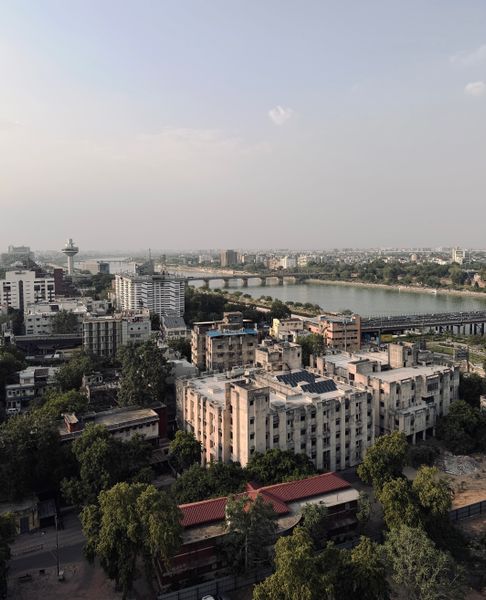
- Early morning: After breakfast, the Heritage Walk through the Old City starts at 7:30 am — a great way to understand the breadth of Ahmedabad's architecture and its local charms, from the walled city's fine Indo-Islamic architecture and its tranquil Jain temples to its colourful bird feeders and fascinating pols (traditional neighbourhood clusters)
- The tour starts at Swaminarayan Temple and ends at Jama Masjid at 10:30 am
- Visit Rani Rupmati Mosque — established by Sultan Mahmud Begada, named after Rani Rupmati, the wife of the Sultan. Constructed during 1430–1440 AD, its features include impressive domes, carved galleries, and tall minarets
- Sidi Saiyed Mosque — famous for its lovely, free-form 'Tree of Life' latticework motif carved in stone
- Sabarmati Ashram (Gandhi Ashram) — also known as Harijan Ashram or Satyagraha Ashram, located on the banks of the Sabarmati River. This was the residence of Mahatma Gandhi from 1917 to 1930, from where he launched the historic Dandi March on 12 March 1930
- Hutheesing Jain Temple — named after its founder Seth Hathee Singh, a prosperous Jain merchant. Built in dedication to the 15th Jain Tirthankara, Dharmnath. The temple is known for its fabulous architectural styling and intricate carvings
- Adalaj Stepwell — built in 1499 AD by Queen Rudabai. This five-storey stepwell (vav) is intricately carved with designs on its walls and pillars including leaves, flowers, birds, fish, and breathtaking ornamental patterns
- Overnight at the hotel

The Sun Temple of Modhera, built in 1026 AD by King Bhima I of the Solanki dynasty, is one of the finest examples of Indian temple architecture of its period. Dedicated to the Sun God Surya, the temple stands high on a plinth overlooking a deep stone-stepped tank. Every inch of the edifice, both inside and outside, is magnificently carved with gods and goddesses, birds, beasts, and flowers. The first view is breathtaking — the pillared portico of the sabhamandap reflected in the massive tank. The weathered golden-brown stone has an overpowering grandeur. Though no worship is offered here now, its majesty endures.
- After breakfast, check out from Ahmedabad and drive north towards Bajana
- En-route, visit Modhera Sun Temple — built in 1026 AD, dedicated to Surya the Sun God. The temple has a sanctum, pradakshina patha (circumambulatory path), and sabha mandap (assembly hall). The exterior features many carved images of the Sun God portrayed wearing a belt and long boots. The mandapa has beautifully carved pillars with exquisite toranas adorning the entrance
- Continue to Patan — a city with over 100 beautifully carved Jain temples and many attractive traditional carved wooden houses
- Rani Ki Vav — the oldest and grandest stepwell in Gujarat, a UNESCO World Heritage Site. Built between 1022 and 1063 AD, its construction was completed by the widowed Queen Udayamati. The seven-storey stepwell descends into the earth with over 500 principal sculptures and over a thousand minor ones depicting Vishnu avatars, goddesses, apsaras, and celestial beings
- Patan is also a centre for fine textiles, particularly Patola silk sarees produced by the characteristic double-ikat technique
- Later drive to Bajana — the gateway to the Little Rann of Kutch
- Check into your hotel; overnight at Bajana
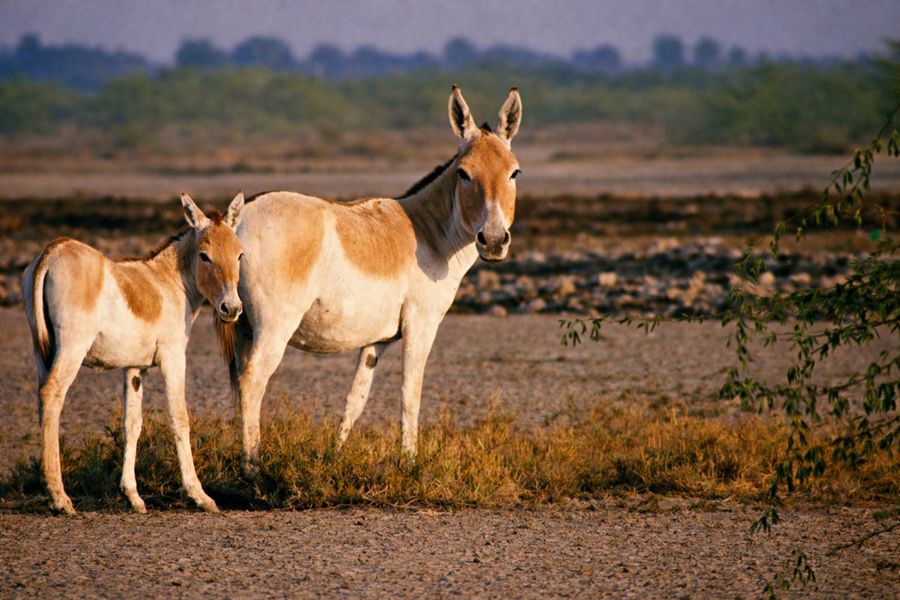
The Wild Ass Sanctuary of the Little Rann of Kutch, spreading across nearly 5,000 square kilometres, is the only place on Earth where the endangered Indian Wild Ass (Equus hemionus khur), known locally as the ghudkhar, still lives. The only other two subspecies of wild asses live in the high arid plateaus of Tibet. Standing more than a metre tall at the shoulder and two metres in length, wild asses are very agile and can run long distances at a speed of 50 km/h — more like wild horses, and far more captivating than their domesticated cousins.
- Early morning: jeep safari into the Little Rann of Kutch — the vast salt desert stretching to the horizon
- Spot the endangered Indian Wild Ass (ghudkhar) — found nowhere else on Earth. Also look for flamingos, cranes, pelicans, desert foxes, and blue bulls (nilgai)
- The stark white landscape, shimmering in the morning light, creates an unforgettable spectacle
- Return to resort for breakfast
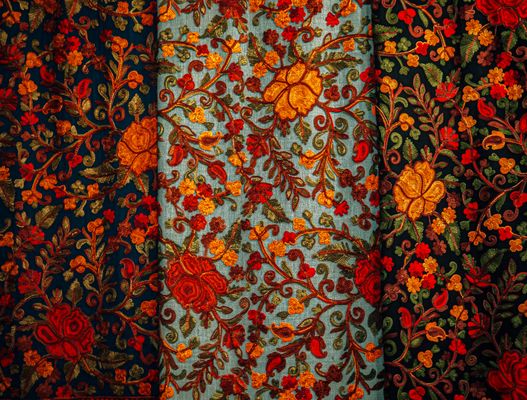
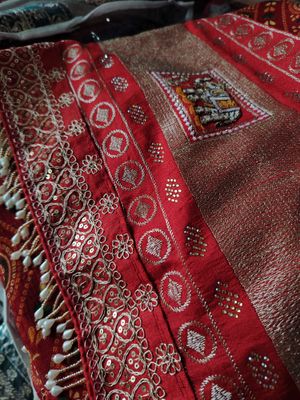
- Evening: explore villages near Bajana to experience Bharvad embroidery — similar to that of the Rabaris of the region. The main, exclusive Bharvad piece is a densely embroidered galmendi (veil), worked on a rough woollen bandhani veil. The embroidery covers the ends with bold floral and sometimes bird motifs, with elaborately wrapped tassel finishing
- Note: Since the late 1990s, Bharvad women have stopped embroidering, preferring to purchase machine-worked textiles, making remaining pieces treasured collector's items
- Overnight at Bajana
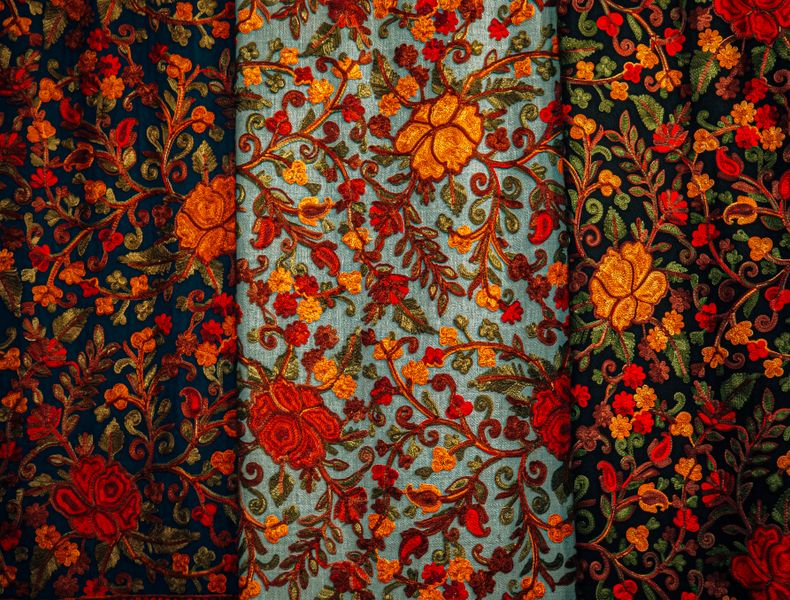
Bhuj, the heart of the Kutch region, was founded in 1510 by Rao Hamirji and named after the Bhujiyo Dungar (the Hill of Bhuj). The city was the capital of the princely state of Kutch and is today a vibrant centre for the region's renowned crafts — intricate embroidery, mirror work, silver jewellery, leather crafts, and the unique Rogan painting that dates back over 300 years.
- After breakfast, check out and drive to Bhuj — the historic capital of the Kutch region
- The drive crosses the vast Kutch landscape — from the salt flats of the Little Rann through changing terrain to the walled city of Bhuj
- On arrival, check into your hotel
- Afternoon local sightseeing of Bhuj (time permitting):
- Aina Mahal (Palace of Mirrors) — currently a museum, built under Rao Lakhpatji. The building bears the mark of its architect Ramsang Malam, who was influenced by European style during his long stay in Holland. Features intricate mirror work, Venetian glass, and porcelain tiles
- Pragmal Palace — built in 1797 on the other side of Aina Mahal. Displays a strong British influence through floral patterns on its tower and Corinthian pillars
- Kachchh Museum — established in 1877, the oldest museum in Gujarat. It has the largest collection of Kshatrapa inscriptions and displays textiles, armoury, gold and silver ornaments, and other regional exhibits
- Overnight at the hotel
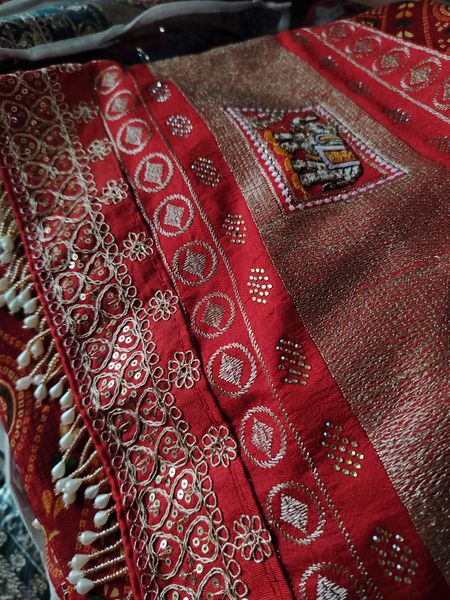
The Banni Grasslands, nestled on the edge of the Great Rann, are home to some of India's most remarkable artisan communities. Each village has its own specialty — from Rogan painting to leatherwork, mirror embroidery to silver jewellery. These crafts have been passed down through generations, and visiting these villages offers a rare chance to see masters at work in their traditional mud-bhunga homes.
- After breakfast, venture into the Banni Grasslands for a full-day exploration of artisan villages
- Hodka — a cultural village located in the Banni Grassland, right on the edge of the great Salt Desert, the Rann. The name derives from the Gujarati word 'Hodi' meaning Boat, as the shape of the Jheel is believed to be in the shape of a boat. It is believed to have been set up by the Halepotra clan, who immigrated from Sindh. Famous for decorative mirrors, lamps, hand fans, wall hangings, leather, clay, wood, metal and mud work, especially exquisite silver jewellery. Artisans sell their goods directly from their artistic mud huts (bhungas)
- Bhirandiyara — a favourite tea stop for locals and visitors alike on the road to Khavda. The village boasts a delicious sweet — fresh Maavo, a milk-based sweet best eaten hot. Most roadside stalls sell Maavo. The local Meghwal Community has exquisite embroideries and skilfully decorated, colourful mud bhungas. Artisan Mr. Arjan Vela (subject to availability) demonstrates lovely pieces of leatherwork
- Nirona — home to about six different crafts. Meet Mr. Abdul Gafur Khatri (subject to availability), who together with his five brothers belongs to the last family of Rogan Painters. Rogan Art involves using a metal stick and castor-oil based colours to create intricate works of genius. Viewing a demonstration is sure to leave you in awe
- Return to Bhuj; overnight at the hotel
- After breakfast, check out from the hotel
- In-time transfer to Bhuj Airport to connect your onward flight with sweet memories of this remarkable journey
- Tour concludes. Carry with you the sunlit columns of Modhera, the silent depths of Rani Ki Vav, the galloping wild asses of the Little Rann, the mirror-work of Hodka's bhungas, the sugar-sweet taste of Maavo, the mesmerising swirl of Rogan paint, and the enduring warmth of Gujarat's timeless hospitality.