
This 9-night journey takes you through the heart of Assam, Meghalaya, and Nagaland — three states that together paint the richest portrait of Northeast India. Begin in Guwahati and drive into Cherrapunjee (Sohra), one of the wettest places on Earth, to trek to the world-famous Double Decker Living Root Bridge woven by the Khasi tribes. Climb to Shillong and detour through the cultural hub of SMIT Village before heading into the wild — Nameri National Park for pristine jungle walks and white-winged ducks, then Kaziranga National Park for the world's largest population of one-horned rhinoceroses. Cross the mighty Brahmaputra by ferry to Majuli, the world's largest river island and the cultural capital of Assam since the 16th century. Explore its Vaishnava monasteries, Mishing tribal villages, pottery and mask-making craft. Continue to Jorhat, the tea treasure house, for a walk through Assam's first tea estate and a tea tasting session. Finally, journey into the highlands of Kohima, Nagaland — the land of the Angami Naga tribe — to visit the WWII Cemetery, State Museum, and the green warrior village of Khonoma.


✓ Included
- Hotel / resort / eco-camp accommodation as per package (9 nights)
- Daily breakfast; meals as per property inclusions
- Private air-conditioned vehicle for all transfers & sightseeing
- Airport arrival transfer at Guwahati & departure transfer at Dimapur
- Ferry transfer to Majuli Island
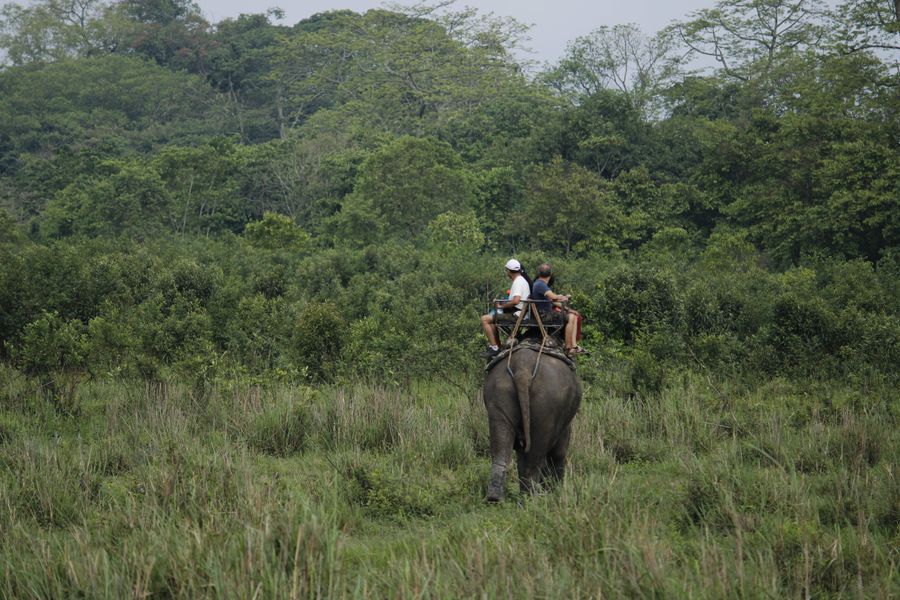
- Jeep safari in Kaziranga (western range) & elephant ride
- Forest guard accompaniment for Nameri jungle walk
- Guide assistance for sightseeing throughout
- Driver allowance, parking, tolls & transport taxes
✗ Excluded
- Airfare to / from Guwahati or Dimapur
- Lunch, dinner & drinks unless mentioned
- Entry fees at parks, museums, caves & monasteries
- Camera fees, tips & personal expenses
- Optional cultural dance at Majuli
- Travel insurance
- Anything not specifically mentioned in inclusions

Cherrapunji, currently known by its historical name Sohra, is credited as being once the wettest place on Earth. It still holds the world record for the most rainfall in a calendar month and in a year — receiving 9,300 mm in July 1861 and 26,461 mm between August 1860 and July 1861.
- Arrive at Guwahati airport — meet your tour guide and driver
- After settling in your vehicle, drive towards Cherrapunjee (also called Sohra)
- En-route, enjoy views of the rolling Khasi Hills and lush green landscapes
- Cherrapunjee is the traditional capital of a hima (Khasi tribal chieftainship) and is also known as the home of the living root villages
- On arrival, check into resort
- Overnight stay at resort

- Early breakfast; move towards the starting point of the Double Decker Bridge trek in Nongriate village
- Trek to the Double Decker Living Root Bridge — one of the most unique bridges in the world, built by the ancient Khasi tribes from the roots of rubber trees
- Enjoy a refreshing shower in the pools with pristine blue water beneath the bridge
- Cross the Hanging Bridge for spectacular valley views
- The trek involves climbing/descending approximately 4,000+ uneven steps — recommended for people with good health only (4–5 hrs trek)
- These living root bridges are an amazing alternative to wooden bridges that dwindle with so much rain; the roots grow stronger with each passing year
- Drive to Shillong (56 km · 2½ hrs); check into hotel
- Overnight in Shillong
SMIT Village is the cultural hub of the Khasi Hills, 11 km from Shillong. The pollution-free village practices Jhum cultivation, sericulture weaving, and animal husbandry. The Ka Pomblang Nongkrem festival is held here annually in autumn — a five-day thanksgiving custom devoted to Goddess KaBlei Synshar.
- Breakfast; check-out from Shillong hotel
- Drive to SMIT Village (11 km from Shillong) — the cultural heart of the Khasi Hills
- Witness Jhum cultivation practices and sericulture weaving in this pollution-free village
- Learn about Ka Pomblang Nongkrem — the five-day thanksgiving festival with the Pomblang ceremony where goats are sacrificed and offered to the administrative head of the Khasi state
- Later, drive towards Nameri National Park — gateway for nature lovers, located in the foothills of the Eastern Himalayas
- The park spans 137 km² of tropical evergreen, semi-evergreen, and moist deciduous forests with cane and bamboo brakes along the Jia Bhareli River
- Check into Eco Camp — tents or thatched cottages with private bathrooms and hot water geysers
- Overnight at Eco Camp, Nameri
- Early morning jungle walk through thick jungle and dry riverbeds, accompanied by a forest guard — witness wildlife and birding life finding their way into an ever-expanding checklist
- Nameri's most important avian residents are the White-winged Ducks — one of the world's most endangered waterfowl
- Return to Eco Camp for breakfast
- Check out and drive towards Kaziranga National Park (75 km · 2 hrs)
- Kaziranga, a UNESCO World Heritage Site, is famous for the Great Indian One-Horned Rhinoceros. The landscape is of sheer forest, tall elephant grass, rugged reeds, marshes & shallow pools
- Declared a National Park in 1974, it is one of the last areas in eastern India undisturbed by human presence — inhabited by the world's largest population of one-horned rhinoceroses, tigers, elephants, panthers, bears, and thousands of birds
- Check into resort
- Afternoon: jeep safari in the western range — the most preferred zone for close sightings of the one-horned rhino
- Retire for the day after a short cultural dance at the resort
- Overnight at resort, Kaziranga
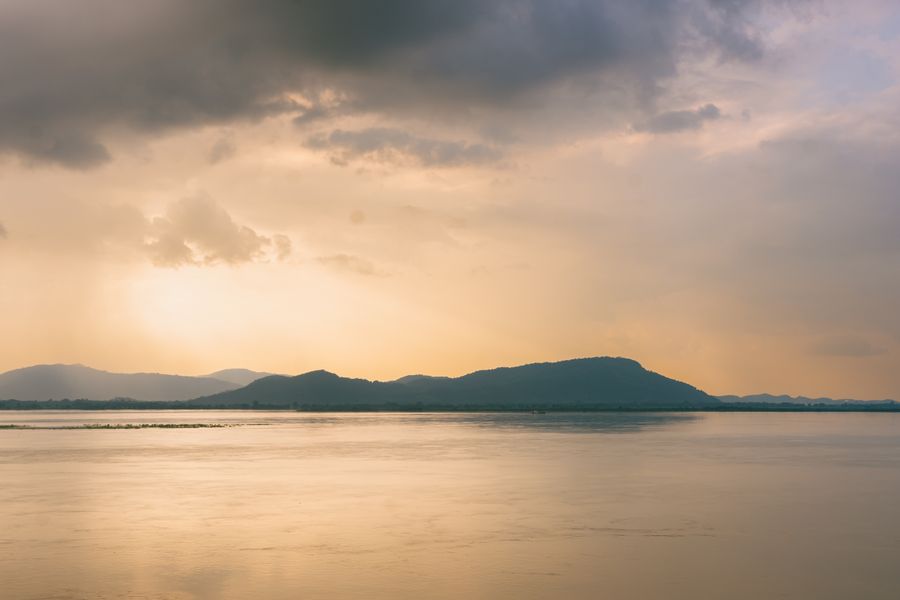
Majuli, located on the Brahmaputra River, is assumed to be the largest river island in the world. The cultural capital of Assamese civilization since the 16th century, it is home to 22 Vaishnava Satras (monasteries) established by Sankaradeva, the father of Assamese culture. Due to soil erosion, its area has reduced from 1,256 sq km (1991) to 875 sq km.
- Early morning: elephant ride through Kaziranga — the best way to behold the vigour and charm of the enchanting wildlife
- Check out from resort; drive towards Majuli (120 km · 2½ hrs)
- Board a ferry to cross the mighty Brahmaputra River and reach the island (1 hour)
- Majuli is formed by the Brahmaputra in the south and the Kherkutia Xuti joined by the river Subansiri in the north
- The island is home to many migratory birds and is a good learning center for neo-Vaishnavite philosophy
- Check into a Chang Ghar — a traditional Mishing tribal house built on stilts
- Overnight stay in Chang Ghar, Majuli
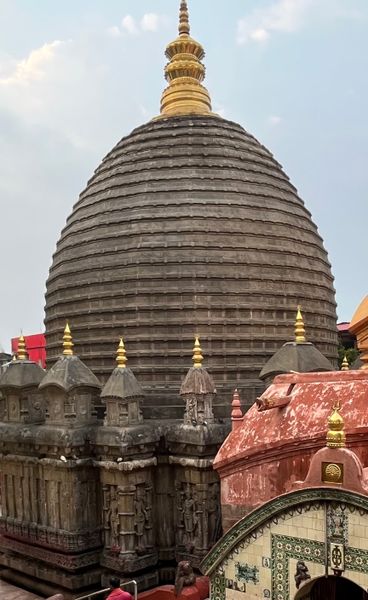
- Explore the island by visiting the Anuati Sattras (monasteries) and Uttar Kamalabari Sattras (monasteries)
- Interact with the monks and visit the monks' quarters
- Visit a Mishing tribal village — the major inhabitants of the island, known for their stilt-houses and fishing culture
- Visit the pottery making village — watch artisans shape clay using traditional methods
- Visit the mask making village — witness the creation of intricate masks used in traditional performances and Bhaona dance-dramas
- Optional: A cultural dance can be arranged at Uttar Kamalabari Monastery
- Overnight in Chang Ghar, Majuli
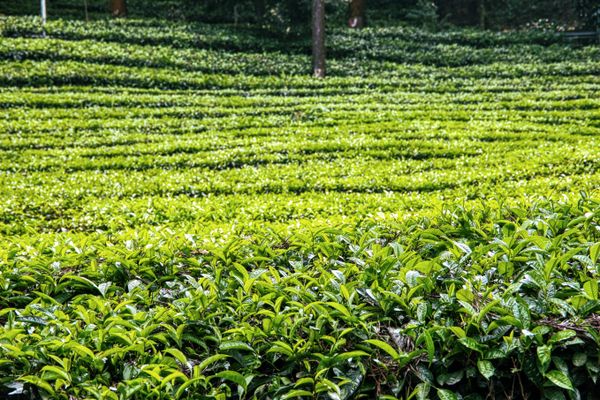
Jorhat, the tea treasure house of Assam — 'Jor' means join and 'hat' means market. The town is home to the oldest golf course in Asia and the third oldest in the world. Cinnamora Tea Estate, established in 1850, was Assam's first tea estate.
- Drive to ferry ghat; board ferry to Jorhat
- On arrival, check into a Tea Estate Bungalow
- Guided walk around the Cinnamora Tea Estate — Assam's first tea estate, established in 1850
- Visit the near the graveyards of the British Tea planters and burial ground of Maniram Diwan — the first Indian commercial tea planter
- Lunch organized at the tea garden followed by a tea tasting session
- Watching tea grow in vast expanse is a treat to the eyes — witness workers plucking tea leaves, cleaning the gardens, and nurturing plants
- Overnight at Tea Estate Bungalow, Jorhat
- Breakfast; set off towards Kohima
- En-route, stop to explore the local market of Dimapur — a sensory experience with sights, sounds, and smells of laidback Naga life. Find great local produce, authentic food, and soak up the atmosphere
- Lunch organized at a local restaurant in Dimapur
- Proceed towards Kohima — the land of the Angami Naga tribe, located at an average elevation of 1,261 meters
- The name Kohima was officially given by the British as they could not pronounce the Angami name Kewhima or Kewhira (meaning "the land where the flower Kewhi grows")
- The town is located on top of a high ridge and serpentines along the mountain ranges as is typical of most Naga settlements
- Check into hotel; overnight in Kohima
- Visit the Kohima 2nd World War Cemetery — constructed in memory of the officers and men who made supreme sacrifices during World War II
- On each grave, beautiful epitaphs are engraved in bronze. The famous inscription on the War Memorial stone reads: "When You Go Home, Tell Them of Us and Say, For Your Tomorrow We Gave Our Today"
- Visit the Kohima State Museum — exhibits the vibrant culture of Nagaland through a collection of fascinating arts and artifacts, bringing to limelight the culture of Naga tribes and their evolution
- (Closed on Monday and government holidays)
- Alternative options:
- Khonoma (20 km · 1 hr from Kohima) — the first green village of Nagaland, estimated roughly 700 years old. Known for rich flora and fauna, unique terraced cultivation, and the nationally endangered Blyth's tragopan. The Angami men here fought a resolute battle against the British from 1830 to 1880.
- Touphema (40 km from Kohima) — a village of the native Angami tribe that has preserved their ancient tribal traditions. Houses a refurbished museum with wood carvings, musical instruments, textiles, and archaeological finds. A guided walk in nearby villages can also be arranged.
- Overnight in Kohima
- Breakfast at hotel
- Drive to Dimapur Airport to board flight for your onward journey
- Tour concludes. Carry the mist of Meghalaya, the wilds of Assam, and the spirit of the Nagas home with you.
| Festival | Place | Date / Month | Duration |
|---|---|---|---|
| Ka Pomblang Nongkrem | Smit Village, Meghalaya | November (5 days) | 4 days |
| Rass Festival | Majuli, Assam | November | 3 days |
| Hornbill Festival | Kisama, Kohima | December (1st–10th) | 10 days |
| Sekrenyi Festival | Touphema, Nagaland | Mid / End February | 10 days |